Showing posts with label Blues. Show all posts

Wednesday, 27 July 2011

Etta James - At Last! (1961)


Etta James' debut album - 'At Last!' - is really a hell of a record. Released in 1961 on Chess' jazz sub-label: Argo (later renamed Cadet Records), with the visionary brother duo of Phil and Leonard responsible for the production and orchestral arrangements, the album gives us a neat overview of Etta's musical sensitivity.

James, simply put, is really a great, all-round singer. 'At Last!' proves she feels just as comfortable doing jazz standards (like 'Stormy Weather' or 'A Sunday Kind of Love') as ripping the hell out of blues tunes ('Tough Mary' and Willie Dixon's 'I Just Want to Make Love to You'). And that's really the power of this album. Etta seamlessly moves from smooth, romantic phrasing to powerful, energetic blues 'shouting' with plenty of r&b and gospel infused singing in between.

Want an example? Well then check out: 'All I Could Was Cry', which was written for Etta by the 'head songwriter' at Chess - Billy Davis with the Gordy siblings - Berry and Gwen. History has it that the song was inspired by Etta's ordeal with her ex-boyfriend Harvey Fuqua (more on that gentleman, later), who, at the time of the recording of the song, was dating Billy Davis' ex-girlfriend - Gwen Gordy - and was just about to marry her. How's that for a love story, eh? The script writers from 'The Bold and The Beautiful' couldn't have come up with a more confusing arrangement. Nevertheless, Etta simply sounds true and authentic in this song, going from a dreamy, delicate singing voice in the beginning to a powerful, wall-trembling holler in the chorus.

The title track, on the other hand, shows a rather well-tempered Etta as she gives a fantastic rendition of this classic song, first recorded by Glenn Miller and his orchestra. James did a great job here, managing to retain the same vibe as the original tune but still giving it her own twist - an accomplishment that's really hard when it comes to cover songs.

Fair play, the tune is good. However, I find just as predictable as it is good. What really got my attention is the four bonus tracks you get if you decide to go for the 1999 CD reissue on Chess/MCA. These tracks feature Etta singing in a duet with her ex-boyfriend: Harvey Fuqua. That's where the magic starts. Try their version of Willie Dixon's classic: 'Spoonful'. A cheeky bassline, roaring horns and Etta's sexy blues cry. Bang!

With a completely different vibe comes: 'My Heart Cries', which is probably my favourite song from the album. Here, both Harvey and Etta keep on singing this beautiful melody over a constant 6-note guitar lick and some horns and a piano in the background. By joining their two voices, they manage to create a very vivid and colourful harmony which really got me hooked and perfectly suits this little love song. Spot on!


Spread the love! 

Tuesday, 26 April 2011

Booker T. & the M.G.'s - Green Onions (1962)


Recent weeks have been pretty hectic for me work-wise and it looks like it ain't gonna stop in the near future, so I'm really struggling to find the time to write stuff on my blog. Nevertheless, I'm just gonna try to keep it short and simple and let the music do the talking. And if there's any type of music that can tell a good story, it's gotta be blues!

'Green Onions' was the debut album of Booker T. & the M.G.'s. It was released in 1962 on Atlantic's memphis-based Stax division, which had in its roster such renowned artists as Otis Redding, Albert King, Sam & Dave and Isaac Hayes.

The group started off as a session band, providing the backbone for many Stax artists at the time. One day, in a break between recordings, they started jamming around with a couple of riffs and fiddled with a little song Booker T. Jones has written way back in high-school - 'Green Onions'. Jim Stewart, the then president of Stax liked their sound and decided to release their debut record with 'Green Onions' as the a-side and 'Behave Yourself' on the flip-side. The single enjoyed great success, selling over a million copies, and this prompted the band to release a whole album.

At the time of the recording of their first full-length release, the band consisted of 4 people: Booker T. Jones (organs, bass guitar, guitar, keyboards), Steve 'The Colonel' Cropper (guitar), Lewie Steinberg (upright bass) and Al Jackson Jr. (drums). Later on, the band replaced Steinberg with Donald 'Duck' Dunn, who has played with them ever since. You might remember both Dunn and Cropper from the legendary 1980 film 'Blues Brothers' - they were both featured in the film and were also members of the original 'Blues Brothers' band.

Booker T & the M.G.'s is kind of a peculiar band. All of the guys in it are really session musicians first and foremost. They have backed a plethora of famous singers on thousands of records, playing on and producing many hits. Booker T. wrote such great tunes as: 'I've Never Found a Girl (To Love Me Like You Do)', 'I Love You More Than Words Can Say' and Albert King's 'Born Under A Bad Sign', which was covered by such powerful bands as 'Cream', with Clapton on board, and The Paul Butterfield Blues Band (by far my favourite rendition). Suffice it to say, Sam & Dave's fantastic 'Hold On! I'm a Comin'' features Booker T. (playing the tuba!!!) and the rest of the M.G.'s with Donald 'Duck' Dunn's killer bassline.

Nevertheless, the group managed to record a great album, that has defined southern soul music for a whole decade. Bands on both sides of the Atlantic were trying to imitate that unforgettable sound of Booker's Hammond organs and Steve Cropper's Fender Telecaster guitar and the groove both of them created.

The 'Green Onions' album is a 35 minute instrumental voyage, filled with blues-infused soul goodies. The album features 12 songs, ranging from slower, kinda mellow tunes like: 'Stranger On The Shore' or 'Lonely Avenue', to faster, rock'n'roll-ish songs like: 'You Can't Sit Down' or 'Twist And Shout', and to the groovy bits like: 'Comin' Home Baby'. There's a bit of everything really. What they all have in common is the fantastic guitar work of Cropper, where hes able to subtly accompany Booker with delicate choruses but also jump into finger-twisting solos, and the great sound of Booker's organs which serve as a trademark sound for the whole album. Prime time soul music with a dash of an R'n'B feeling, a hazy blues aura and jazz sophistication. You might think to yourself - how the hell could they play Ray Charles' 'I Got A Woman' without a singer?! Well, the truth is, their music is so good you don't even realise that this song ever needed any lyrics.

You could have heard some of their songs before - a lot of the tunes were used as a soundtrack to 'Get Shorty' (starring Travolta, De Vito, Hackman and a few others), and 'Behave Yourself' was featured in the Coen brothers' awesome picture: 'Big Lebowski'. Rings a bell?


Spread the love!

Wednesday, 9 March 2011

Tadeusz Nalepa - Bluesbreakout 1971-1972 (1991)


Somebody once famously stated that: 'If it ain't Mississippi, if it ain't raining and if you ain't sitting on the corner of the street soaking wet, hoping you weren't hungry - it ain't the blues'.
Well I always thought that was true... Until last week, when my good friend proved me wrong by showing me a fantastic album - 'Bluesbreakout' by Tadeusz Nalepa's 'Breakout' band.

Believed it or not, but Tadeusz Nalepa is white, he doesn't come from Mississippi (but from Rzeszów, Poland) and he sure can play the blues! I was really surprised that such fantastic blues music can come from behind the iron curtain.

The album was released in 1991 as a compilation of two of the groups' previous titles - 'Blues' and 'Karate' (1971 and 1972 respectively). The music therefore was recorded in times of deep communism in Poland - when artists where banned from public performances if their hair was too long and when the state treated the Beatles as a symbol of western, imperialistic society's moral decay.

Bearing that in mind, I think the authentic feeling of the music and its uncanny resemblance to American blues is mind-boggling - Western records were really hard to come by at that time. Still, you can hear many influences in Breakout's playing - there's a bit of Clapton, a bit of Robert Johnson a bit of John Mayall etc.etc.

You ask: how come? Well, Nalepa recalls touring Western Europe with his previous band - Blackout - and meeting Eric Burdon, who gave him his guitar and a bunch of tapes with 'black blues music' - Nalepa immediately fell in love with it. Actually, the couple of months of concerts they performed in Holland at that time allowed them to buy some proper equipment - before, they used to manually convert acoustic guitars into electric ones, simply because the latter weren't readily available in the *ekhm* People's Republic of Poland. The Western equipment is the reason why the album sounds a lot better than most other Polish music at that time.

The lyrics sung by Nalepa are in no way worse than the music of Breakout. The person responsible for these great texts is the poet Bogdan Loebl who also used to live in Rzeszów at that time. While the music is clearly inspired by American standards, the lyrics have a unique quality - deep, moving, yet very simple.

So, it turns out you don't have to be a black farmer working in the cotton fields of deep Mississippi to feel the blues. As Howlin' Wolf once said: "When you ain't got no money and can't pay your house rent and can't buy you no food, you damn sure got the blues".

This quote frightingly accurately describes communist Poland... 

...Nalepa just found his Mississipi in Rzeszów.


Spread the love!

Monday, 21 February 2011

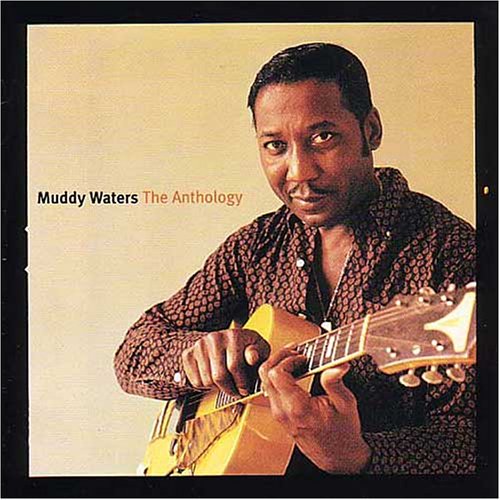
Muddy Waters - The Anthology (1947 - 1972) (2001)


I'm not a big fan of compilation albums, I'd usually rather go for the 'real deal'. But here, I'm very pleased to make an exception. This double disc set is a definite guide to one of the most iconic blues musicians of all time - Muddy Waters. If this name does not ring a bell, then this album is definitely for you.

Released in 2001 by Chess, it contains fifty essential songs Muddy recorded for this premier Chicago blues label. It showcases his biggest releases from 1947 till 1972. So, you pretty much get a cross-section view of Waters' recordings - from the raw, naked, Robert Johnson-influenced solo country-blues style of the 40s to the heavily amplified, energetic, urban Chicago blues that later defined Muddys sound and got him the recognition he deserved.

Anyways, the man's a freakin' legend! He was an inspiration for generations of musicians and I'm sure that if it wasn't for him, bands like The Rolling Stones, The Yardbirds or Led Zeppelin would not be what we know them today. Actually, Mick Jagger's group took their name from Waters' 1950 hit song: 'Rollin' Stone' - how's that for tribute?

If you were to list other Muddys songs that were as inspirational as 'Rollin' Stone', the list would be longer than the notorious Maxwell Street in Chicago. Nevertheless, let me name quite a few:  'I Feel Like Going Home', 'Train Fare Home Blues', 'Rollin and Tumblin', 'Got My Mojo Working', 'Long Distance Call', 'I Just Want To Make Love To You', 'Mannish  Boy', etc., etc. If you never heard of Muddy Waters, the two last songs are probably the ones you'd recognize nevertheless. The latter being used in many soundtracks, including Pulp Fiction.

By giving us an overview of Muddys works throughout the years, the compilation also exposes us to the various people Waters was working with. The album showcases such great musicians as: Jimmy Rogers (guitar), Little Walter (harmonica), Sam Lay (drums, who was also the drummer for the Paul Butterfield Blues Band), Willie Dixon (bass, but also a very prolific song writer - he once famously stated that it's no wonder that it's the bassists, who write the most songs  - they just have a lot of time on their hands to think while they're playing), Otis Spann & Sunnyland Slim (both pianists).

Anyways, if you feel like finding out more about Muddy and Chess Records, I'd recommend the 2008 'Cadillac Records' film, starring Adrien Brody (as the Polish immigrant, Leonard Chess, who started the iconic label), Mos Def (as Chuck Berry) and Beyonce Knowles (as Etta James [yep, that's right]).


So, pour yourself a nice glass of bourbon, sit back, relax and enjoy the fantastic sounds of Muddy Waters, the hoochie coochie man!


(love the moment when halfway through the track, Little Walter, after hearing Muddy constantly hollering that he's 'goin' down to New Orleans', shouts out: 'Awww, take me wit'ya man, when you go!', not sure if that was rehearsed or not. Awesome, nonetheless!)


and the unmistakable Family Guy:


Spread the love!

Monday, 14 February 2011

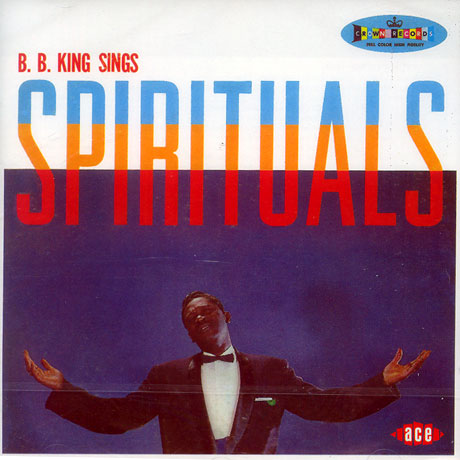
B.B. King - Sings Spirituals (1959)


B.B. King....the first thing that pops into your head when you hear this name is: great blues guitarist. That's true - the man can play! I had the pleasure of listening to him live many moons ago and I must agree. The 15 Grammy awards King keeps on his mantelpiece seem to prove he ain't no rookie!

However, the Spirituals album is something completely different. This time B.B. leaves his beloved Lucille (as he calls his Gibson ES-355 electric guitar) in the box and focuses on singing. And boy, he's actually quite good at it!

The album, released on Crown records in 1959, features 10 fantastic gospel songs - among them classics, like 'Precious Lord' and 'Swing Low Sweet Chariot' but also no less than 6 tunes from the repertoire of the 5 Blind Boys of Mississippi group. And, as with gospel, the arrangements are the 'industry standard', so to speak. Electric organs, piano, bass, drums, tons of joyful hand clapping, a fantastic backing choir and B.B.'s powerful, full-bodied voice.

Many blues musicians have flirted with gospel from time to time. However, for King it was not just a passing fling. He grew up singing in a gospel choir at Elkhorn Baptist Church in Kilmichael, USA - so for him, it was back to the roots!

The lyrics, as you might have guessed, are pretty predictable. With songs like 'Jesus Gave Me Water',  'Ole Time Religion', 'Servant's Prayer', 'Army of The Lord'....well, you get the picture. Don't be scared though. Even if, like me, you don't give a rat's ass about the Baby Jesus and the Virgin Mary, I'm sure you'll still be touched - everybody needs some spirituality every now and then. Besides, the lyrics and the general theme of the album give it a sense of authenticity - so yeah, it definitely is the real deal. Praise the Lord! ;)


Spread the love!

Tuesday, 4 January 2011

The Paul Butterfield Blues Band - Paul Butterfield Blues Band (1965)


       To say that the Paul Butterfield Blues Band was a great band would be an understatement. They were groundbreaking – not only because they took the blues to new, experimental levels, but also because they caused a deep societal change – they opened up the blues scene to every single white kid in the States.


But first things first….
       …Paul Butterfield was born and raised in Chicago in a white, cultured family – his dad was an attorney and his mum was a painter. Encouraged by his parents, he took flute lessons from a very early age and, by the time he got to high school, he studied with the first-chair flautist of the Chicago Symphony.
       Around the time he got to university, however, he started hanging around Chicago blues clubs, where he got the opportunity to listen to such great blues musicians as: Muddy Waters, Howlin’ Wolf, Otis Rush and Little Walter. Soon enough, he finds himself spending six/seven days a week in the clubs and none at uni, so he decides to quit and devote himself to music – his new weapon of choice being the diatonic ten-hole Hohner 'Marine band' harp .
       As legend has it, one day while he was sitting on a porch in his hood, sipping on a quart of beer and practicing his harmonica, a little white boy student from Oklahoma, by the name of Elvin Bishop, bumped into him. The two immediately connected and began playing parties in the neighbourhood, with Bishop on acoustic guitar, and hitting downtown clubs together. Not only did they listen to these great black musicians, they also started playing with them on stage.
     
       Now, you gotta understand one thing…at that time in Chicago (circa 1960), or anywhere in the states for that matter, they were probably one of the only white guys in the clubs (nevermind on stage!). So u get these two ‘honkies’ from the University of Illinois, of middle-class roots and upbringing playing this essentially black music that came from the slaves in the Mississippi delta. How is that possible, you ask? Well...they were just goddamn good at it!
       Actually, they got so good that they were offered to gig regularly at Big John's, a club in the white North Side of Chicago. So, Butterfield and Bishop set out to put a band together. They pulled Jerome Arnold (bass) and Sam Lay (drums) of Howlin' Wolf's touring band (a pretty ballsy move, if you ask me, given the fact that Wolf was a pretty big and scary mutherfucker!) and formed the Paul Butterfield Blues Band - then a quartet.
       Legend has it that it was Paul Rothchild of Elektra Records, the bands future producer, who invited Michael Bloomfield (a son of a wealthy jewish entrepreneur, a soon-to-become-legendary blues guitarist) to join the band and also offered them to record their first album.
       Bloomfield, even though he himself was a great musician, was very respectful of Butterfield's abilities, famously saying about the leader of the newly-formed band that: 
He was bad, man. That cat was bad. It took all the persuading to get me to join. 
       The first recordings of the group were scrapped, and only recently released, in 1995, as 'The Original Lost Elektra Sessions'. However, in September 1965, the group was joined by a young music student - Mark Naftalin - who played the keys, and the final version of the Paul Butterfield Blues Band, now a sextet, was formed and the band was ready to hit the studio for a second time and record their first album!


       ...and it was a hell of an album! The self-titled release consisted of 11 tracks, the majority of which were old standards recorded in a lively, electric, Chicago blues style; but there were also some band songs as well.
     The album kicks off to a great start with an energetic recording of Nick Gravenites' 'Born in Chicago' (some of you might remember it from the early scenes of the 'Blues Brothers 2000' film) with the killer opening lines: 
'I was born in Chicago
In 19 and 41
Well, my father told me
Son, you had better get a gun'

       ...and already very early in the album we're exposed to Butterfield's unique, heavily amplified harp sound and Bloomfield's eclectic style.
     The next tune is a sort of an uptempo, 'rock'n'roll-ish' rendition of Elmore James' 'Shake Your Moneymaker' which is in turn followed by a great version of 'Blues With A Feeling', where Butterfield showcases his great vocal skills and Bloomfield has a mutherfucker of a solo.
       This is followed by the bands own instrumental song: 'Thank You Mr. Poobah' (credited to Butterfield, Bloomfield and Naftalin) which was actually recorded by accident - Bishop was late for the recording session and so, with the tape rolling, they began an instrumental warm up, jamming this jazzy groove; exchanging solos and two-measure licks.
       The next song is an upbeat recording of the classic 'Got My Mojo Working' by Muddy Waters. This time, however, Sam Lay, the drummer, is a leading force when he takes control of the mic and sings (shouts?) out the legendary lyrics in a very energetic way, which is only reinforced by the driving beat he produces with his kit.
       When it comes to Willie Dixon's 'Mellow Down Easy', the band delivers a very lively performance with a 'rocky' touch highlighted by Bishop's guitar constantly playing out the same 2-bar riff throughout the whole tune giving it a solid rock'n'roll rhythm.
       After that comes 'Screamin' - an instrumental song written by Bloomfield. The song really showcases Butterfield's unique and innovative style - the harp, cupped in his hands with a microphone between the palms, ceases to be only a backing instrument and becomes a main force driving the songs, with Butterfield approaching it with the sophistication of jazz saxophone players.
        Next up is 'Our Love is Driftin', written by the both guitarists of the band. It is, in my opinion, one of the best songs of the album. Not only you get to hear Butterfield's amazing vocal skills with his chesty tone and delivery full of authority (which, to be fair, for a white guy sound really authentic) but you can also witness Bloomfield's amazing sound - his guitar sustaining a note so sweetly and then jumping into these brilliant cascading figures so effortlessly and precisely.
       Jacobs' 'Last night' is another great banger! The rhythm section does a tremendous job (you can hear that PBBB really benefited from adding Mark Naftalin and his Rhodes to the squad) and Paul's voice, so full of sorrow and emotion, coupled with these great lyrics really do the trick:

Last night
I lost the best friend I ever had
You know she gone, gone and left me
That made me feel, feel so bad

Well it's early in the morning, Baby
And my love come fallin' down with you
I want you to tell me baby
Honey what are we gonna do

Will I wait till tomorrow?
They tell me everyday brings about a change
Well I love you, love you baby
Honey ain't it a cryin' shame?

       The album finishes with a truly rock'n'roll infused track. 'Look Over Yonders Wall' has Bloomfield's aggressive riffs, Bishop's driving guitar in the background and Paul's growling voice singing about a guy who manages to avoid the army draft and goes on entertaining lonely married women.

       At this point it is also much called for to give credit to the producer of the album - Paul A. Rothchild, who did a great job putting the band together, envisioning their sound and actually making it all work. Rothchild ain't no rookie - he produced the first 5 albums by The Doors and also worked with the likes of: Joni Mitchell, Neil Young and Janis Joplin. High five Mr.Rothchild!

      Anyways, this was a story of how can two white kids from middle-class families make it big in a environment that would make anybody else feel like a nun in a strip club - out of place to say the very least. However, thanks to their amazing skills, devotion and, racial issues aside, authentic feeling, they won over massive audiences in the states. There would not be a single university dorm in the US in the 60s where you wouldn't stumble upon Butterfield's tunes blaring out of a PA. That was one of their huge achievements - they opened up the blues to white kids across the states by singing not about the Mississippi delta, failed crops or doing time in the Parchman Farm Penitentiary but about life in the urban jungle. It was blues with balls, not blues as destitution and oppression.
        And last but not least, the Paul Butterfield Blues Band was the first racially-mixed blues band that really showed white artists that you didn't have to imitate the blues sound, but you could just play the blues.


Here's a little sample from their live performance in the Monterey International Pop Music Festival in 1967:


And here's a selection of some of the tunes from the album:

  • Paul Butterfield Blues Band - Born in Chicago


  • Paul Butterfield Blues Band - Our Love is Driftin'


  • Paul Butterfield Blues Band - Last night


All the other songs from the album seem to be on youtube so have a butchers'!


Spread the love!